How Can Dental Practices Use Email to Reactivate Patients Without Sounding Pushy?
Email can help dental practices bring patients back with trust, timing, and relevance—not pressure.
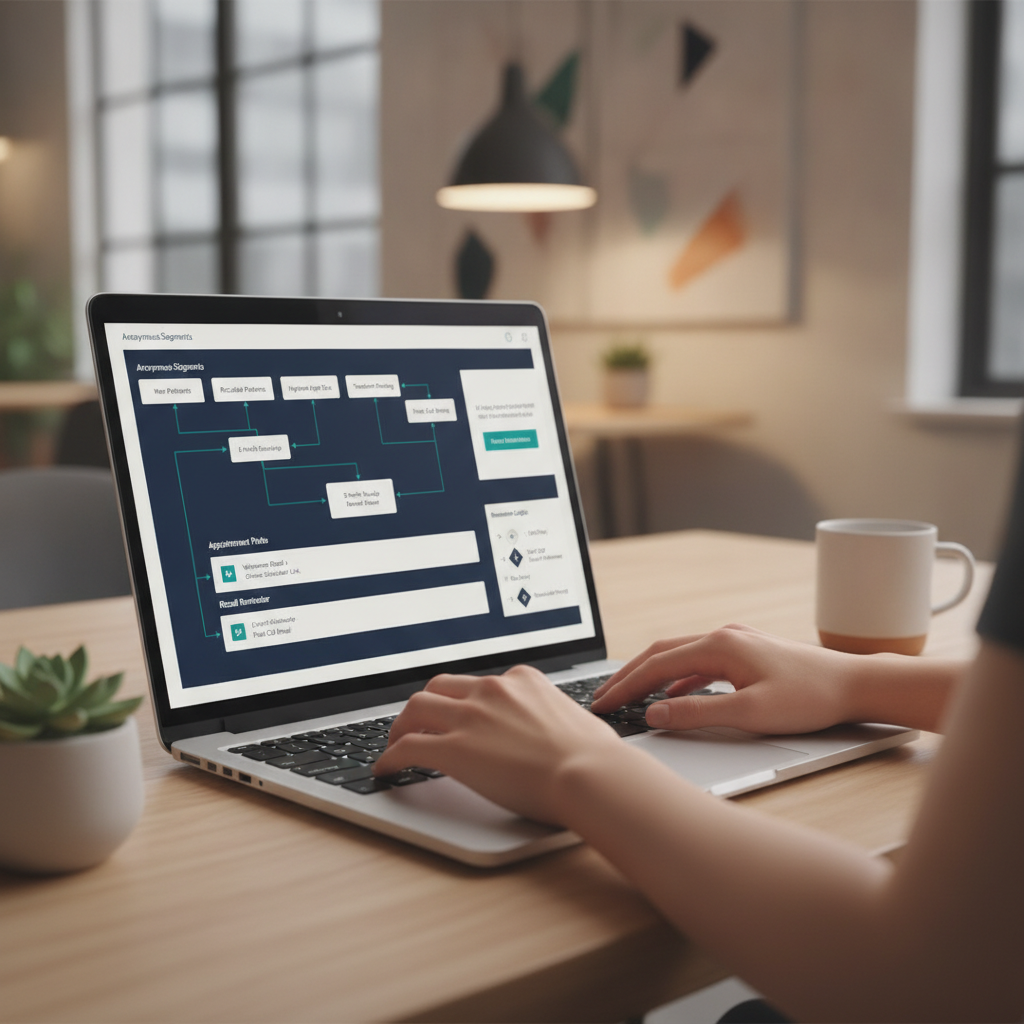
Yes. For a national dental practice or multi-location group, the stronger model is a calm patient-lifecycle workflow: classify the communication, segment by a relevant care context, limit unnecessary detail, connect the message to a staffed scheduling path, and measure what happens after the click. Dental patient reactivation emails should feel like a useful door back into the practice, not a warning that the patient has failed.
The key is operational discipline. Soft copy cannot repair a weak audience rule, an exposed health detail, an unmonitored reply inbox, or a scheduling page that creates more friction than the email removes.
Reactivation is often treated as a writing assignment. Someone exports a list of inactive patients, drafts a friendly reminder, adds a button, and calls the sequence complete. That skips the decisions that carry the most risk: who belongs in the audience, why the practice is contacting them, what information appears in the message, who answers replies, how opt-outs are handled, and what the practice will count as a successful return.
A better email marketing services plan starts before the copy. It connects the practice-management system, privacy review, scheduling operation, clinical escalation path, analytics setup, and patient-facing language into one operating model. That is where reactivation becomes a retention system rather than a blast campaign.
Why does patient reactivation email need a softer operating model?
A patient may not have returned for reasons the practice cannot see. They may have moved. Their insurance may have changed. They may be caring for a family member, managing a new diagnosis, dealing with dental anxiety, working through a financial decision, or simply postponing something that felt easy to postpone. The practice should not invent the reason, and the email should not imply that it knows.
That is why guilt is a poor reactivation strategy. Phrases that frame the patient as overdue, neglectful, irresponsible, or at risk can turn a practical reminder into a judgment. False urgency creates a similar problem. A countdown, alarmist subject line, or vague health consequence may attract attention, but attention is not the same as trust.
The softer model is not passive. It is specific about the next step while being careful about the story it tells. It can say that the practice is reaching out because its records indicate a follow-up may be due or because there is an open care conversation worth revisiting. It can explain how to request an appointment. It can offer a reply route for questions. It does not need to tell the patient why they disappeared.
- Does the message explain why the practice is writing without exposing unnecessary health information?
- Does it invite rather than accuse?
- Does it avoid promising an outcome, discount, or level of urgency that the practice cannot support?
- Can the patient take the next step without decoding the campaign?
- Can the patient ignore or opt out of commercial messaging without being made to feel unsafe or unwelcome?
This approach also fits the larger dental marketing system. Retention copy should sound like the same practice patients meet on the website, on the phone, and at the front desk. When the email says “we are here to help” but the reply disappears for two days or the scheduler has no idea what campaign was sent, the operating experience contradicts the message.
Which patient segments should you define before writing?
“Inactive patients” is not a usable audience by itself. It is an internal label that can hide very different care histories, permissions, communication preferences, and next steps. Each practice should define inactivity for its own workflow rather than borrow a universal window from a template.
The most useful segmentation question is not “How long has it been?” It is “What verified reason does this group have to receive this communication now?” Time can be part of the rule, but it should not be the only rule. The practice may need to consider the last completed visit, an unfinished scheduling conversation, a recommended follow-up, a recall status, a communication preference, an opt-out status, a duplicate record, a transferred record, or another documented condition.
| Illustrative segment | Useful purpose | Message boundary | Required handoff |
|---|---|---|---|
| Routine recall | Remind a patient that a routine scheduling step may be due under the practice’s records and workflow. | Keep the email factual and minimal. Do not add a diagnosis, consequence, or treatment claim that the message does not need. | Direct scheduling route, reply owner, communication-preference check, and documented stop rule. |
| Open follow-up | Reopen a previously documented conversation about the next appointment or a question that was left unresolved. | Do not reveal sensitive detail in the subject line or inbox preview. Do not present the email as clinical advice. | Trained staff member who can review the record and route clinical questions appropriately. |
| Lapsed hygiene | Offer a simple path to return when the practice has a defined hygiene or preventive-care workflow. | Avoid blame and assumptions about the gap. Do not use a generic national interval as if it applies to every patient. | Scheduling availability, patient-preference review, and a human path for questions about timing or records. |
| Promotional offer | Present a commercial offer or service announcement to an audience the practice is permitted to contact. | Classify it as marketing. Do not disguise a promotion as a treatment reminder or use health detail to make the offer feel more personal. | Commercial-email review, opt-out process, suppression controls, offer approval, and clear terms. |
| Needs manual review | Hold records that do not fit the automated rule cleanly. | Do not force uncertain records into the nearest segment simply to increase list size. | Named owner who can resolve duplicates, transferred care, special communication requests, or unclear status before send. |
This grid is an operating framework, not a legal classification or a recommendation that every practice use the same segment names. Your practice-management data, policies, care model, and applicable rules determine the actual audience logic.
Build exclusions with the same care as inclusions. Suppress unsubscribed commercial-email recipients where required. Respect documented communication preferences and reasonable confidential-communication requests. Exclude records that cannot be matched confidently. Hold patients whose situation needs staff review. A smaller list with a defensible reason for contact is more useful than a larger list built from assumptions.
Before launch, create a one-page audience record that states the segment definition, source fields, exclusions, owner, classification, send date, and reason for contact. That record gives the practice an answer when someone later asks, “Why did this patient receive this message?”
What can the email say without guilt, pressure, or unnecessary health detail?
Good reactivation copy does four jobs. It identifies the practice clearly. It gives an accurate reason for the message. It makes the next step easy to understand. It gives the patient control over how to proceed.
The copy does not need to reveal the full segment logic. A subject line such as “A quick note from [Practice]” may be more privacy-conscious than one that names a treatment or condition. The preview text should be reviewed too. Mobile notifications, forwarded messages, shared inboxes, and locked-screen previews can expose information the body copy appears to protect.
Use a calm message spine
- Recognizable sender: Use the practice name or an approved sender patients can identify.
- Accurate reason: Explain that the practice is checking in about scheduling or an open next step without overstating what the record proves.
- Low-friction action: Offer one clear appointment path and state what will happen after the patient uses it.
- Human alternative: Let the patient reply or call when the online path does not fit.
- Respectful close: Avoid pressure, guaranteed availability, invented urgency, and a lecture about returning.
Personalization should improve the next step, not show off the database. A first name may help. A treatment label, diagnosis, insurance detail, or specific clinical history may create unnecessary exposure. Use only the fields approved for the purpose, and test how each field renders when the data is missing, duplicated, or unusually formatted.
Do not guess at motivation. “We know life gets busy” sounds empathetic, but it still assigns a reason. A cleaner alternative is to say that the practice is making it easier to reconnect when the patient is ready. That keeps the invitation human without pretending the practice knows the patient’s circumstances.
Operator rule: The strongest reactivation email is usually the one that says enough to be useful and not enough to make the patient wonder how much private information is being used to market to them.
How should email connect to phone, replies, and scheduling?
The email is only the front door. If the next room is disorganized, the campaign creates work without creating a better patient experience.
Start with the scheduling destination. Does the button open a general contact page, a request form, a true scheduling tool, or a phone prompt? Does the page explain whether the appointment is confirmed or merely requested? Can the patient choose a location or provider when that matters? Does the page collect more health detail than the scheduling step needs? Is the mobile experience usable?
Then define the human path. Some patients will reply because they do not know which appointment to request. Some will ask about cost, records, symptoms, medication, or whether they should return before another appointment. Marketing automation should not answer clinical questions. Route replies to trained practice staff through an approved inbox, define response ownership, and create a clear clinical escalation path.
The patient sees a clear sender and a relevant, privacy-conscious message.
The patient uses the scheduling path, replies, or calls based on what feels easiest.
The system sends the request to the right location, queue, or trained staff owner.
Staff answer scheduling questions and escalate clinical questions appropriately.
The practice records the outcome without placing unnecessary health detail in marketing analytics.
Test the full path before sending. Use a test record that represents each segment. Click from a phone. Submit the form. Reply to the email. Call the number. Confirm who receives each action and what the patient sees next. A broken confirmation page or unowned reply inbox can undo careful copy in seconds.
This is also where content marketing supports reactivation. When patients repeatedly ask the same non-clinical process question, the practice may need a clearer scheduling page, FAQ, payment-information page, or patient-resource explanation. The campaign should expose those gaps, not repeatedly compensate for them with longer emails.
Which HIPAA and CAN-SPAM checks belong in the launch workflow?
Privacy and commercial-email review should happen before the send is scheduled, not after a complaint. This article provides an operating framework, not legal advice. A practice should apply current federal guidance, applicable state law, its own policies, vendor agreements, and advice from its privacy officer or counsel.
The first question is classification. Under federal guidance, HIPAA generally requires written authorization before protected health information is used or disclosed for marketing, subject to limited exceptions. HIPAA also distinguishes marketing from certain treatment and health-care operations communications. That distinction is why a true appointment reminder should not be treated casually as interchangeable with a promotion.
The second question is channel and safeguards. HHS permits email communication with patients when reasonable safeguards are used and reasonable requests for confidential communications are accommodated. For electronic PHI sent across open networks, the practice must assess protections, choose an appropriate approach, and document the decision. No platform should be called automatically “HIPAA compliant” based only on a sales page.
The third question is commercial-email operation. FTC guidance says CAN-SPAM applies beyond traditional bulk email. Commercial messages need accurate sender information, non-deceptive subject lines, a valid postal address, and a clear opt-out mechanism. The practice also needs suppression handling so an opt-out does not become another message in the next export.
The privacy and classification framework is grounded in official HHS marketing guidance. The commercial-email controls come from the FTC’s CAN-SPAM compliance guide. The measurement section uses Google Analytics documentation on events and key events. Those sources define federal and platform principles; they do not replace the practice’s state-law, privacy, security, or legal review.
Audience approval
Document the segment rule, exclusions, data source, classification, and owner. Review records that do not fit cleanly.
Copy approval
Review sender, subject, preview text, body, personalization fields, footer, links, and every claim for accuracy and privacy.
System approval
Confirm access, security review, suppression behavior, test records, delivery settings, and the scheduling destination.
Response approval
Name the reply owner, phone owner, clinical escalation path, response window, and documentation process.
Measurement approval
Define campaign naming, key actions, data boundaries, and what cannot be attributed reliably.
Post-send review
Review patient confusion, staff workload, replies, opt-outs, scheduling behavior, and any privacy or deliverability issue before the next send.
Use a send record. Keep the approved audience definition, copy, fields, footer, links, owners, dates, and measurement plan together. That record makes the program easier to audit and repair when staff, software, policies, or scheduling workflows change.
What should a dental practice measure beyond opens and clicks?
Open rate is not patient reactivation. It may reflect inbox behavior, privacy features, image loading, or curiosity. Clicks are closer to intent, but a click does not prove that a patient requested or completed care.
Define a measurement ladder that matches the practice’s systems. The available steps may include a reply, phone call, scheduling-page start, submitted request, booked appointment, confirmed appointment, or completed visit. Not every practice can connect every step, and it should not force sensitive patient data into a marketing platform to create a prettier report.
Google Analytics uses event-based data, and an important action can be marked as a key event when it is configured and tested. That can help measure a scheduling request or another meaningful website action. It does not automatically connect the action to a completed visit, prove causation, or make the tracking appropriate for health information.
Use consistent campaign naming so the practice can distinguish the reactivation sequence from other email traffic. Keep the naming stable across the email platform, landing page, analytics setup, and internal report. Then reconcile the marketing view with practice data through an approved process.
Useful operating signals
Delivered messages, valid replies, scheduling starts, submitted requests, calls attributable to the approved path, booked appointments when traceable, opt-outs, and common questions.
Signals that need caution
Open rates, platform-attributed conversions, repeat clicks, forwarded emails, unverified call sources, and any result that cannot be matched without exposing inappropriate information.
Useful patient-experience signals
Whether people understand the next step, whether staff can respond, whether appointments are actually available, and whether the same confusion repeats across channels.
Claims the data cannot make
That the email caused revenue, that a sequence has a universal booking rate, that opens equal trust, or that one campaign proves the long-term value of the program.
Review workload as well as outcomes. A sequence can generate many replies and still be operationally weak if nobody owns them. A low booking count may reflect a scheduling bottleneck rather than copy. A high click count may expose a landing page that does not explain what happens next. Measurement should improve the system, not create a heroic story about the campaign.
This is where a broader marketing service architecture matters. Email, website content, analytics, scheduling, and front-desk operations need shared definitions. Otherwise each channel reports success while the patient experiences friction between them.
What does a practical reactivation sequence workflow look like?
Start small enough that the practice can monitor the whole experience. Pick one defined segment with a clear reason for contact. Confirm classification and permissions. Build one message or a short sequence with explicit stop rules. Test the scheduling and reply paths. Launch to a controlled audience. Review both patient behavior and staff workload before expanding.
- Define the lifecycle goal. State what the practice is trying to make easier for the patient.
- Classify the communication. Decide whether the message is treatment, operations, commercial marketing, or a mix requiring additional review.
- Build the audience rule. Document data fields, inclusion logic, exclusions, communication preferences, and manual-review cases.
- Write the message and handoff together. The copy, scheduling path, reply process, and escalation route are one deliverable.
- Run privacy, security, and commercial-email checks. Record the approval rather than relying on verbal memory.
- Test every route. Review mobile rendering, preview text, form behavior, inbox ownership, phone routing, and suppression.
- Launch and observe. Watch for patient questions, staff load, opt-outs, delivery problems, and scheduling friction.
- Review the evidence. Decide what to keep, change, stop, or investigate without inventing causation.
The sequence earns the right to scale when the practice can explain why each patient received it, how the next step works, who owns the response, and which evidence will be used in the next review. That is a more durable standard than “the first email had a good open rate.”
Frequently Asked Questions
Are dental appointment reminders considered marketing under HIPAA?
HHS says appointment reminders are considered part of treatment and may be made without authorization. The actual communication still needs appropriate safeguards, and a commercial promotion should not be disguised as a reminder. Mixed-purpose messages should be classified under current practice policy and applicable law before launch.
Can a dental practice email inactive patients?
Email may be possible, but “inactive” is not automatic permission. The practice should review the purpose of the message, the information used, patient communication preferences, reasonable confidentiality requests, consent or authorization requirements, state rules, commercial-email obligations, and its own privacy and security policies.
What should a patient reactivation email include?
Use a recognizable sender, an accurate reason for contact, minimal necessary detail, one tested scheduling route, a human alternative, and the appropriate commercial-email footer and opt-out information when the message is promotional. Avoid blame, false urgency, unsupported clinical claims, and personalization that exposes unnecessary information.
How many reactivation emails should a practice send?
There is no universal number in the approved sources. Use the smallest sequence that serves a defined purpose, respects preferences, includes suppression and stop rules, and can be monitored by staff. Expand only after the practice reviews patient response, staff workload, scheduling capacity, and compliance controls.
What should happen when a patient replies with a clinical question?
Route the reply to trained practice staff through an approved workflow. Marketing automation should not diagnose, recommend treatment, interpret symptoms, or answer a patient-specific clinical question. The campaign plan should name the inbox owner and the escalation route before the first message is sent.
Should a practice measure booked appointments or completed visits?
Use the deepest meaningful action the practice can connect accurately and lawfully. A scheduling request may be the reliable website measure, while booked or completed care may require a separate approved reconciliation process. Do not move sensitive health information into marketing analytics merely to claim closed-loop attribution.
Would a calmer reactivation sequence fit your practice better than another reminder blast?
Ask Geeks For Growth to map a patient reactivation email sequence that fits your practice, privacy needs, and scheduling workflow.
Send your patient lifecycle goals and current reminder approach for an email strategy review through our contact page.
Related Posts

AI vs. Human copywriting: Which works better for email conversions? Picture this: It's Monday morning and your inbox is flooded.…

We live in a moment of possibility—one where size no longer sets the boundaries of success. For small businesses, entrepreneurs,…

Updated August 2025 With how busy and competitive the digital world has become, it’s easy for small businesses to get…