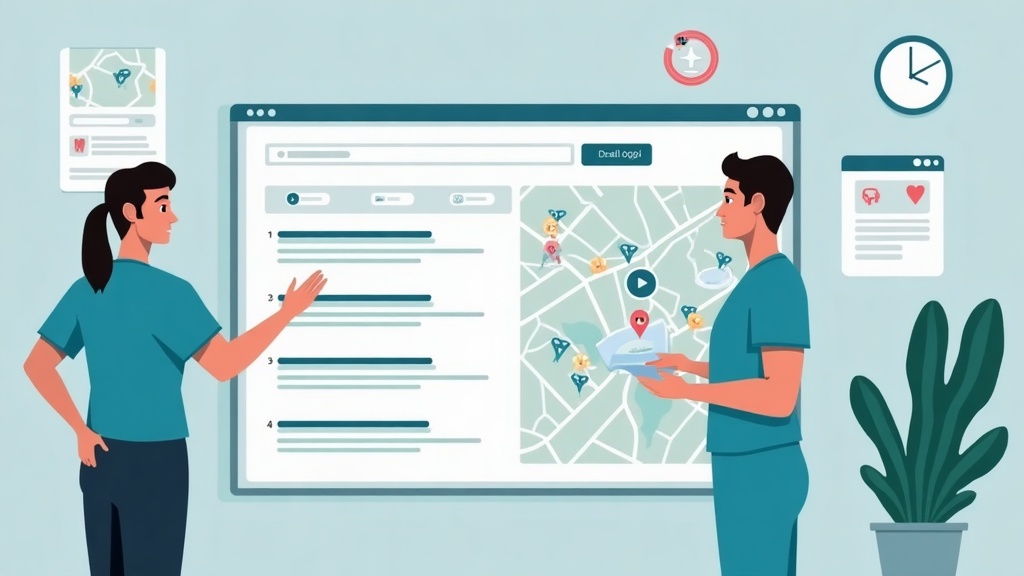
Why Do Dental Websites Get Traffic But No Appointment Requests?
Dental websites get traffic but no appointment requests when the page answers search intent without removing patient uncertainty.
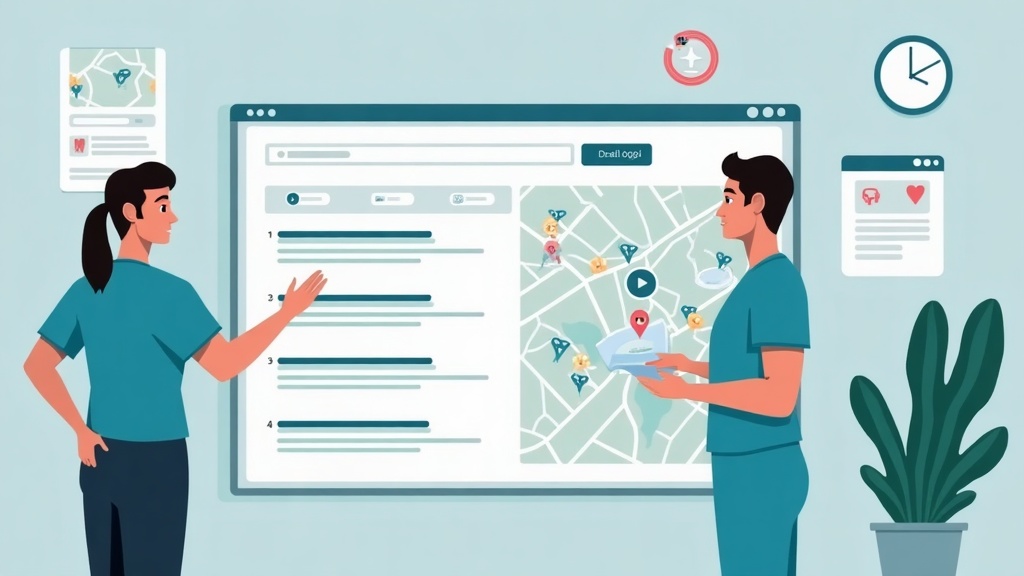
Patients arrive with a specific question: tooth pain, implants, Invisalign, cleaning, cosmetic dentistry, insurance, or a new dentist near home. If the page does not answer that question and make the next step clear, they leave.
The traffic-to-appointment gap is a structural problem. It sits in service page clarity, trust proof, CTA language, insurance uncertainty, mobile usability, and scheduling friction.
Here is what that means for your practice: before buying more traffic, fix the parts of the website that should turn searchers into new patient requests.
Where do dental websites lose patients after the click?
Dental websites lose patients when the page answers the wrong question or makes the next step feel harder than calling another practice. The visitor may arrive from local search, but they still need to understand fit, trust, appointment availability, insurance, and what happens next.
Dental website conversion is not one button. It is the full path from first impression to appointment request. If any part feels vague, the patient delays or leaves.
In dental conversion audits, we often find the same pattern: the practice has service traffic, but the page makes the patient solve three problems alone — “Is this the right treatment?”, “Can I trust this office?”, and “How do I book?”— Geeks for Growth Strategy Team
| Friction Point | What the Patient Feels | What to Fix |
|---|---|---|
| Unclear service page | “Do they actually help with my issue?” | Add answer-first service copy, common symptoms, treatment fit, and next step. |
| Weak proof | “Why this practice?” | Show reviews, provider context, before-after guidance where appropriate, patient process, and trust cues. |
| Confusing CTA | “What am I supposed to do?” | Use one primary appointment action with clear supporting contact paths. |
| Insurance uncertainty | “Will this cost more than I expect?” | Explain verification steps and what details the patient should provide. |
| Mobile friction | “This is too hard on my phone.” | Simplify forms, sticky phone access if the theme allows it, readable service sections, and fast pages. |
Why do unclear service pages block appointment requests?
A service page has to do more than describe dentistry. It has to help the patient decide whether the practice is right for their need. A dental implant page, emergency page, cosmetic page, Invisalign page, and hygiene page should not use the same structure.
Weak service page
A short paragraph, a stock image, and a “call today” button. The patient still does not know what happens next.
Stronger service page
Answer-first copy, symptoms or situations, process overview, provider proof, insurance or financing context, and a clear booking path.
Best service cluster
The core service page links to FAQs, related treatments, insurance guidance, reviews, and new patient information.
What should a dental service page answer first?
It should answer the patient’s immediate concern. For emergency dentistry: “Can they help quickly, and what should I do now?” For implants: “Am I a candidate, what is the process, and what affects cost?” For cosmetic dentistry: “Can I see results, understand options, and book a consult without pressure?”
For deeper page structure, review our guide to a high-converting dental website. The issue is rarely only design. It is the relationship between service clarity and conversion architecture.
What trust signals matter before a patient books?
A patient is not only choosing a dental procedure. They are choosing a team, a physical office, a provider, and a process. Trust signals need to appear where the patient is deciding, not only on a separate testimonials page.
Provider context
Show who provides the service, what the patient can expect, and how the team explains options. Keep claims accurate and reviewable.
Review and reputation cues
Use reviews and testimonials where allowed and appropriate. Avoid editing them into claims the patient did not make.
Procedure clarity
Explain the steps, the appointment type, and what happens before treatment. Patients convert when uncertainty drops.
Financial clarity
Explain insurance verification, financing discussion, or estimate process without promising coverage or final cost.
Freshness and accuracy
Update service pages, hours, provider names, insurance language, and appointment instructions so the site matches the office process.
The ADA reminds practices to consider ethics, state and federal advertising rules, and patient privacy when using marketing and social proof. Review images, reviews, before-and-after content, and claims before publishing.
How do you simplify the appointment path?
The appointment path should be obvious from the page the patient is reading. Do not make someone scroll, search the header, interpret a vague “learn more” button, or complete a long form before they know what happens next.
State the next step
Tell the patient whether to request an appointment, call, choose a service, or submit insurance details.
Reduce fields
Ask for the information needed to start the conversation, not every detail the office could collect later.
Set expectations
Explain whether the team confirms availability, verifies insurance, or follows up with questions.
Measure outcomes
Track appointment requests, calls, form abandonment, and service-page conversion by source.
Should every page have the same CTA?
No. The CTA should match intent. A hygiene page may push direct appointment request. An implant page may offer a consultation. An emergency page may prioritize phone contact. A cosmetic page may ask the patient to request a smile consultation or upload a question. The path should fit the service.
- “Request an emergency appointment” is clearer than “Learn more.”
- “Ask our team to verify your insurance details” is clearer than “Submit.”
- “Request an implant consultation” is clearer than “Contact us.”
- “Call before you wait with dental pain” is clearer than a generic footer phone number.
What metrics reveal the traffic-to-appointment problem?
If your dental website gets traffic but no appointment requests, separate visibility from conversion. Traffic tells you people found the site. Appointment and intake data tell you whether the site helped them act.
| Metric | What It Shows | What to Do Next |
|---|---|---|
| Service page visits | Which treatments or concerns attract visitors. | Compare high-traffic pages against appointment requests by service. |
| CTA clicks | Whether visitors try to act. | Move or rewrite CTAs when service pages get attention but no clicks. |
| Form starts vs submits | Whether the form creates friction. | Reduce fields, clarify expectations, and test mobile usability. |
| Calls from mobile | Whether mobile visitors use phone paths. | Make phone access easier and match service urgency. |
| Appointment quality | Whether requests become real new patients. | Connect marketing reports to front desk outcomes and service fit. |
Google’s search guidance points back to page experience and crawlable, useful content. Google’s E-E-A-T update also reinforces the importance of experience and trust signals in how quality is evaluated. For dental practices, that means the patient experience on the page matters before and after the click.
How does GFG improve dental website conversion?
We audit dental websites like conversion systems, not brochures. We look at the service page structure, local search path, proof, insurance clarity, mobile experience, CTA architecture, and appointment workflow.
Our Megaphone system uses 40% AI structure and research and 60% human strategy and editorial depth. AI can help surface search patterns and page gaps. Human strategy decides what a dental practice should say, what the team can support, and how to move a patient toward the right appointment.
Service-page architecture
We structure high-value services around patient questions, provider trust, and appointment intent.
Trust and proof layer
We position reviews, provider context, process detail, and source-aware claims where the patient needs them.
Appointment path cleanup
We simplify CTAs, forms, mobile actions, and tracking so the practice can see what is working.
You can review our UI/UX design approach or our broader dental marketing system. The useful question is simple: where does a ready patient hesitate, and what page element should remove that hesitation?
- Google E-E-A-T update — used for experience, expertise, authoritativeness, and trust direction.
- Google SEO Starter Guide — used for crawlability, organization, and page experience direction.
- ADA marketing and advertising guidance — used for dental advertising, ethics, and privacy review direction.
Frequently Asked Questions
Why does my dental website get traffic but no appointments?
The most common reasons are unclear service pages, weak trust proof, vague CTAs, insurance uncertainty, slow or awkward mobile experience, and scheduling friction. Traffic brings the patient to the page. Conversion architecture helps them act.
What should a dental service page include?
It should include an answer-first opening, patient situations or symptoms, treatment overview, provider or team trust proof, insurance or payment context, FAQs, and a clear appointment path.
Are dental appointment forms usually too long?
Often, yes. A form should collect enough information to start the appointment process, not everything the team could ask later. Long forms can be especially costly on mobile.
Does website design affect dental lead generation?
Yes. Dentist website design affects whether patients understand the service, trust the practice, and know how to book. Design should support the patient decision, not just make the page look polished.
What should a dental practice fix first?
Start with the highest-traffic service page that produces the fewest appointment requests. Rewrite the first screen, clarify the service, add trust proof, simplify the CTA, and check the mobile path.
Your website should be generating qualified patient requests while you work.
If it is not, we can show you why. We will review service pages, proof, insurance clarity, mobile friction, appointment paths, and tracking in a free 30-minute walkthrough.
Prefer to talk first? Call +1-801-810-4988.
Related Posts

What Should a Dental Website Prove Before a New Patient Calls? AA Ada Ani, Geeks for Growth Content Strategist &…

Home › Brand Design › How Do Patients Choose a Dentist Online in 2026? Dental Marketing How Do Patients Choose…

Home › SEO Services › Dental AI Search Dental Marketing · AI Search Readiness How Should Dental Practices Prepare Service…