Legal Marketing Claims: When ‘Best,’ ‘Top,’ and Outcome Language Creates Risk
'Best,' 'top,' and results language can mislead even when true. Learn how law firms can review superlatives and outcome claims before they publish.
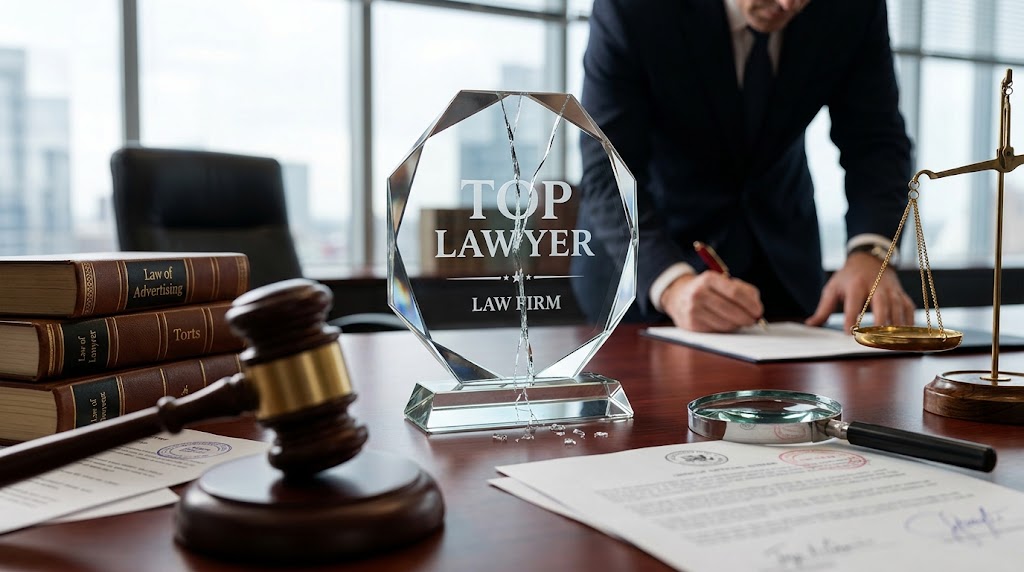
For law firms, the risky lines in website and ad copy are rarely outright lies. They are true-sounding phrases that read like measured facts: “top-rated,” “the best injury lawyers in the state,” a seven-figure verdict with no context, “specialists” with no certifying body named. ABA Model Rule 7.1 prohibits false or misleading communications about a lawyer’s services, and its comments make clear that truthful statements can still mislead. The review that protects your firm asks one question of every claim: can we show the evidence today, and does the full statement leave the right impression?
This guide sorts the common claim types by risk, explains what the rules actually say, and ends with a claim-review rule your firm can adopt. It is not legal advice. Your state’s version of the rules governs, and your ethics counsel or state bar has the final word.
Most marketing leads inherit this problem rather than create it. Picture a typical inherited site. The hero banner says “Top-Rated Injury Lawyers” because a previous agency wrote it. The Google Ads headline says “We Win” because it tested well. A partner asked for “$4.2M Recovered” at the top of the homepage. Practice-page headings say “Specialists” because it sounds more confident than “We handle.”
None of that was written in bad faith. But each line is a claim about the firm’s services, and each one has to stand on its own when a prospective client, an opposing firm, or a bar reviewer reads it. This guide is for the person who now has to decide which lines stay.
Why truthful words can still mislead
The black-letter text of ABA Model Rule 7.1 is short. A lawyer may not make a false or misleading communication about the lawyer or the lawyer’s services. A communication is misleading if it contains a material misrepresentation, or if it leaves out a fact needed to keep the statement, taken as a whole, from being materially misleading.
The comments to the rule spell out what that means in practice. Truthful statements that are misleading are also prohibited. That single sentence is why “but it’s true” ends very few conversations about advertising copy.
Consider three statements a firm might reasonably consider true:
- “We recovered $4.2 million for a client.” True, if it happened. But a reader with a very different injury may assume a similar recovery is realistic for them.
- “Top-rated personal injury firm.” True, perhaps, by some site’s star average. But without the source, a reader may take it as an independent ranking against every other firm.
- “Our attorneys specialize in medical malpractice.” Possibly accurate as a description of focus. But “specialize” can imply a formal credential, and some readers will assume one exists.
Each line contains a fact. Each line can also leave an impression the fact does not support. That gap between fact and impression is the thing your review has to catch.
Your state’s rule may be stricter than the model. The ABA Model Rules are a template. Each state adopts its own version, and some keep language the model moved into the comments. New Hampshire’s Rule 7.1, for example, still lists statements likely to create an unjustified expectation, and comparisons that cannot be factually substantiated, in the text of the rule itself. Check the version that governs your attorneys.
Superlatives and comparisons need support
“Best,” “top,” “leading,” “#1,” and “most experienced” all make the same move: they compare your firm to others. Under the current ABA comment, an unsubstantiated claim about a lawyer’s services, or an unsubstantiated comparison with other lawyers, may be misleading if it is presented with enough specificity that a reasonable person would conclude it can be substantiated.
Read that carefully, because it tells you where the risk actually lives. Loose, obviously subjective language is a different animal from a claim that reads like a measured result. “We care about every client” is not something anyone expects you to prove. “Ranked the #1 injury firm” is, because it sounds like someone measured it.
Lower-risk phrasing
Describes what the firm does or how it works: “We handle car, truck, and motorcycle accident claims.” “Every consultation is with an attorney.” Statements you can show to be true today, with no implied comparison to other firms.
Needs evidence before it runs
Anything that reads as measured or ranked: “top-rated,” “best in the state,” “#1,” “most experienced,” “highest recoveries.” If you cannot name the source and hand over the evidence, rewrite it or cut it.
Third-party awards and ratings
Firms often justify superlatives with an award or a directory listing. That can help, but it does not settle the question by itself. Whether and how a firm may display a particular award or rating badge varies by state, so check your jurisdiction’s guidance before building a headline around one.
Even where an award is permitted, the review questions stay the same. Does the copy name who gave it and when? Does the headline make it sound broader than it is? An award for one attorney in one year is not the same claim as “the best firm,” and the copy should not blur the two.
Where these claims hide
Superlatives concentrate in the places with the least room for context: hero banners, page titles, ad headlines, social bios, and image alt text. A bio paragraph can explain a qualification. A thirty-character ad headline cannot. That is why short-form placements deserve the strictest review, not the lightest.
Outcome language and unjustified expectations
Results language is the claim type marketing teams most want to use and most often get wrong. Past results are persuasive precisely because they suggest what might happen next. That suggestion is the risk.
The ABA comment to Rule 7.1 addresses this directly. A truthful report of results achieved for past clients may be misleading if it leads a reasonable person to expect the same results for other clients in similar matters without reference to the specific facts and law of each client’s case. The comment also says an appropriate disclaimer or qualifying language may prevent a statement from creating unjustified expectations.
Notice the word “may.” A disclaimer is a tool, not a guarantee. A small “Past results do not guarantee future outcomes” line under a large, bold dollar figure may not change the impression the figure creates. Context that sits next to the result, and is as easy to read, does more work.
- Name the case type. “Commercial truck collision” says far more than a bare dollar figure.
- Give the facts that drove the result, at the level your ethics counsel approves. Liability, injury severity, and insurance limits all shape outcomes.
- Place the qualifying language beside the result, in readable type, not in a footer the reader will never reach.
- Avoid “we win” framing. A single result presented as a pattern implies a record you may not be able to show.
- Check your state’s rule on past results. States differ on what is permitted and what disclosures are required.
To make that concrete, take a hypothetical homepage line: “$4.2M Recovered. We Win.” A revised version: “In one commercial trucking case, our firm recovered $4.2 million for a client with severe injuries. Every case depends on its own facts, and past results do not predict the outcome of yours.” The revised line is longer and less punchy. It is also a statement your firm can defend line by line.
Specialist claims and how you collect reviews
Two more categories carry their own rules, and both are easy to overlook because they do not look like advertising headlines.
“Specialist,” “expert,” and “certified”
ABA Model Rule 7.2(c) says a lawyer may not state or imply certification as a specialist in a particular field unless the lawyer has been certified by an organization accredited by the ABA or approved by an appropriate state authority, and the certifying organization is clearly identified in the communication. The ABA moved this provision from Rule 7.4(d) to 7.2(c) in its 2018 amendments, so older guidance may cite the earlier number.
In practice, that creates a useful distinction for copy review. Describing what an attorney focuses on is generally a different claim from stating or implying formal certification. “Certified specialist” with no certifying body named is the version to fix first. “Expert” and “specialist” in headings deserve a second look too, because your state may treat them more strictly than the model rule, and because a reader may assume a credential exists.
Reviews and testimonials under the FTC rule
The Federal Trade Commission’s Rule on the Use of Consumer Reviews and Testimonials, 16 CFR Part 465, took effect on October 21, 2024. It applies to any business that sells services, which includes law firms, and it targets specific practices rather than reviews in general.
The rules described in this article come from ABA Model Rule 7.1 and its comments, ABA Model Rule 7.2(c), New Hampshire’s Rule 7.1 as an example of how states adopt the model differently, and the Federal Trade Commission’s Rule on the Use of Consumer Reviews and Testimonials (16 CFR Part 465). The ABA Model Rules are a template; your firm is governed by the version your state has adopted, and your ethics counsel or state bar should confirm how it applies to your marketing.
| Section | What the rule prohibits | What it means for a law firm |
|---|---|---|
| § 465.2 | Writing, creating, or selling reviews or testimonials that misrepresent that the reviewer exists, used the service, or their actual experience. Buying or disseminating them when the business knew or should have known. | No invented client reviews or testimonials, however they are produced, and no repackaging a real client’s words into an experience they did not have. |
| § 465.4 | Offering compensation or incentives conditioned on a review expressing a particular sentiment, positive or negative. | You can ask clients for reviews. You cannot offer anything in exchange for a good one. |
| § 465.5 | Reviews or testimonials by officers or managers without clear disclosure of their relationship; managers soliciting undisclosed reviews from employees or relatives. | Partners, staff, and their family members should not be leaving undisclosed reviews of the firm. |
| § 465.6 | Misrepresenting that a website or entity the business controls provides independent reviews of a category that includes its own services. | A “top lawyers” list or ratings site your firm runs cannot be presented as independent. |
| § 465.7 | Groundless legal threats, intimidation, or knowingly false accusations to remove or prevent reviews; presenting filtered reviews as complete when negative ones are suppressed by rating. | Do not threaten reviewers, and do not show only five-star reviews as if they were all you received. |
| § 465.8 | Buying or selling fake followers, likes, or views to misrepresent influence for a commercial purpose. | Inflated social numbers are a claim about the firm too. |
One distinction is worth stating plainly, because firms worry about it. The rule targets incentives tied to sentiment, fake and insider reviews, company-controlled “independent” sites, and suppression. Sending a review request to a client is not, by itself, one of the listed prohibitions. Offering that client something in exchange for five stars is.
Testimonials also interact with your state’s lawyer advertising rules, which may restrict them further than the FTC rule does. Treat the FTC rule as a floor, not the full picture.
A copy audit and a claim-review rule
An audit works best when it treats every claim type the same way: find it, ask the right question, decide what evidence is needed, and act. The table below is the version we use as a starting point. Adjust the questions to your state’s rule with your ethics counsel.
| Claim type | Example | Question to ask | Action if the answer is no |
|---|---|---|---|
| Superlative | “Top-rated injury lawyers” | Can we name the source and hand over the evidence today? | Name the source in the copy, or rewrite as a description of what you do. |
| Comparison | “More experienced than other firms” | Could we substantiate this against the firms the reader would compare us to? | Cut it. Describe your own experience without the comparison. |
| Past result | “$4.2M recovered” | Does the reader see the case type and facts that shaped the result, right next to it? | Add the context beside the figure, or move the result to a page with room to explain it. |
| Outcome promise | “We win” / “Get the compensation you deserve” | Does this imply a result for the reader’s case? | Rewrite to describe the process or the firm’s approach. |
| Specialist claim | “Certified specialists” | Is there a certifying organization, approved as Rule 7.2(c) requires, named in the copy? | Name it, or change to language describing focus without implying certification. |
| Testimonial | Client quote on a practice page | Is it real, unedited in meaning, and permitted under your state’s rule? | Verify with the client and counsel, or remove. |
| Review practice | Review request email | Is anything offered in exchange, and only for positive reviews? | Remove any sentiment-conditioned incentive. |
Run this across every place copy lives: the website, Google Business Profile, paid search and social ads, directory profiles, social bios, email templates, and intake scripts. The same claim often appears in five places, and fixing it in one leaves four.
Pull every headline, ad, bio, and badge into one sheet.
Tag each line by claim type using the table above.
Attach the source or proof to each claim that needs one.
Send anything uncertain to ethics counsel against your state’s rule.
Go live, then review again on a set schedule.
No superlative, comparison, result, specialist claim, or testimonial goes live until one named reviewer has matched it to evidence on file and, where uncertain, cleared it with ethics counsel against your state’s rule.
What makes the rule work
- One named reviewer, with authority to say no, plus a backup.
- An evidence file: sources for awards, case details for results, certification records for specialist claims.
- A rule that covers every channel, including ads and AI-assisted drafts, not just the website.
- A recheck schedule, because awards expire, attorneys leave, and old ads keep running.
- A written list of phrases the firm has decided not to use, so new staff and vendors start from the same place.
The hardest part is rarely the rule itself. It is applying it to copy someone senior likes. Framing helps: the review protects the attorney whose name is on the communication. That tends to land better than “marketing says we can’t.”
What we never promise, and where to start
We will not tell you a specific phrase is allowed or banned everywhere. The answer depends on your state’s rule, and your ethics counsel is the right person to make that call. What we can do is find every claim, organize the evidence, and flag the lines that need that conversation.
We will not tell you a disclaimer fixes a results claim. The rule’s own comment says qualifying language “may” help, and a disclaimer that contradicts the headline above it usually does not.
We will not promise that cleaning up claim language will raise your rankings, leads, or signed cases. It reduces a specific kind of risk and makes your marketing easier to defend. Those are worth doing on their own terms.
And we will not write copy that implies outcomes, even when an ad platform says it tests well. Our Megaphone publishing system pairs about 40 percent AI-assisted structure and research with 60 percent human strategy, and claim review sits squarely in the human part. A draft that says “we win” does not get past that layer.
This week
- Read your homepage hero, your top three practice pages, and your active ad headlines. Highlight every superlative, number, and “specialist.”
- For each highlighted line, write down the evidence you would show if asked. Anything with no answer goes to the top of the list.
- Pull your review-request template and check it for any incentive tied to a positive review.
- Book time with ethics counsel for the lines you cannot resolve yourself.
- Name the person who will approve claim language from now on.
That is a small amount of work for the risk it addresses. Most firms find the high-risk lines cluster in a handful of headlines and ads, which makes the first pass faster than expected. Claim review is one layer of the website, content, and search work listed on our services page.
Frequently asked questions
Can a law firm call itself the “best” or “top” firm if a third party ranked it?
Possibly, but the ranking does not settle the question on its own. Name the source and date, avoid wording broader than the award, and confirm your state’s rules on displaying awards and ratings. A claim that reads like a measured fact needs evidence behind it.
Can we post verdict and settlement amounts on our website?
It depends on your state, so start there. Under the ABA comment to Rule 7.1, a truthful result can mislead if it implies other clients will get the same outcome without regard to their own facts. Present results with case context, and confirm your state’s requirements with ethics counsel.
Does a “past results do not guarantee future outcomes” line make results language safe?
Not automatically. The ABA comment says qualifying language may prevent a misleading impression. A small disclaimer under a large headline figure may not. Context placed next to the result, and as easy to read, does more.
Can our attorneys say they “specialize” in a practice area?
It depends on the wording and your state. Model Rule 7.2(c) restricts stating or implying certification as a specialist unless the lawyer is certified by an accredited or state-approved organization that is named in the communication. Describing focus is a different claim, but check how your state treats “specialist” and “expert.”
Can we offer clients something in exchange for leaving a review?
Not in exchange for a review expressing a particular sentiment. The FTC rule prohibits incentives conditioned on positive or negative reviews. Your state’s lawyer advertising rules may add further limits on gifts or testimonials, so confirm with counsel before offering anything.
Can staff or family members leave reviews for the firm?
The FTC rule requires officers and managers to clearly disclose their relationship in any review or testimonial they write, and prohibits managers from soliciting undisclosed reviews from employees or relatives. The simplest policy is that insiders do not review the firm.
Worried some of your copy oversteps?
If your site and ads have collected claims from several writers over several years, we can inventory them, organize the evidence, and set up a review rule your firm can keep, for law firms anywhere in the country.
Explore Law Firm Marketing Services · Request Strategic Guidance · Browse Resources
Related Posts