How Do Patients Choose a Dentist Online in 2026?
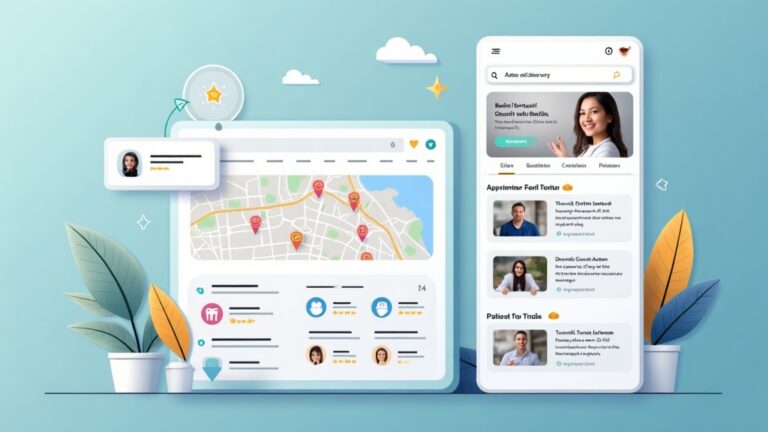
Patients choose dentists online by reducing uncertainty fast: who treats this problem, what reviews say, whether insurance is clear, how easy booking feels, and whether the practice looks credible on mobile.

Patients compare dental practices by trust, fit, convenience, and friction — usually before they ever call.
- A patient usually checks local visibility, reviews, service details, insurance or payment clarity, dentist/team bios, photos, and appointment options.
- Dental patient trust is built through consistent proof: accurate business information, review context, clear procedure pages, real office details, and simple booking steps.
- Dental website messaging should answer “Is this for me?” before it tries to sell the practice.
- A strong dental brand is not only visual recognition; it is the whole decision path from Google result to appointment request.
When someone searches for a dentist online, they are trying to remove risk. They want proof that the practice is real, nearby, trusted, relevant to their need, and easy to contact. If your site makes them hunt for that proof, another practice gets the request.
In dental audits, traffic rarely stalls because patients cannot find the practice. It stalls because the site asks them to resolve insurance, trust, timing, and fit on their own. That is a brand and conversion architecture problem.
What do patients check first?
Patients usually start with the visible trust layer: local results, reviews, photos, hours, proximity, and whether the practice appears active. Then they move into fit: services, dentist bios, insurance, scheduling, and whether the message sounds like it understands their problem.
For high-value procedures such as implants, Invisalign, cosmetic work, sedation, and emergency care, patients often need more proof than a routine cleaning search. They compare specifics. They want to know whether the practice handles their exact concern, not just whether it offers general dentistry.
Can I trust this practice?
Reviews, photos, dentist/team details, and consistent brand signals reduce the first layer of doubt.
Do they solve my problem?
Procedure-specific pages help patients match their need to the right service.
Can I book without friction?
Clear calls to action, phone visibility, forms, scheduling context, and insurance cues make the next step easier.
Why do reviews and convenience matter so much?
Dentist reviews give patients a proxy for lived experience. They look for patterns: comfort, communication, scheduling, billing clarity, staff tone, and whether the practice handles anxiety well. A five-star average without context is less useful than a review profile that answers real concerns.
Convenience is also a trust signal. Hours, parking, online forms, insurance guidance, financing context, and appointment availability tell the patient whether the practice has considered the real barriers between interest and booking.
Read your own homepage on mobile as if you were a new implant or emergency patient. If you cannot find proof, service fit, insurance context, and the appointment path within the first few screens, the page is making the patient work too hard.
How does dental website messaging reduce uncertainty?
Good dental website messaging answers the patient’s hidden questions before they become objections. “Do you treat nervous patients?” “Will I be judged?” “Do you explain cost before treatment?” “Can I get an appointment around work?” “Is this dentist experienced with my procedure?”
Brand recognition matters because patients see you in more than one place. Your Google result, Business Profile, website, review responses, service pages, and appointment flow should feel like one practice. When those signals disagree, trust drops.
| Patient Concern | Page Element That Helps | What to Avoid |
|---|---|---|
| Anxiety or embarrassment | Calm copy, dentist bio, patient-first process, and comfort details. | Generic promises with no specific care context. |
| Insurance uncertainty | Clear accepted-plan language and verification caveats. | Making the patient call just to learn basic plan direction. |
| Procedure fit | Specific service pages with candid expectations and next steps. | One “services” list that treats every procedure the same. |
| Booking friction | Visible phone, form, hours, and appointment path. | CTA buttons that disappear on mobile. |
Where do dental websites lose trust?
Dental websites lose trust when the page looks polished but does not answer patient questions. Stock photos, vague service copy, buried insurance details, thin bios, outdated location information, and confusing CTAs all create friction.
The hardest part is that the practice may still have decent traffic. That makes the problem look like an SEO issue when it is really a decision-path issue. Brand design, content structure, and conversion architecture need to work together.
When a dental site has traffic but weak appointment requests, we usually find the same pattern: the service pages explain what the procedure is, but not why this practice is the right, trusted, convenient choice for that patient.— Geeks for Growth Strategy Team
- Google Business Profile guidelines for local practice representation and business information accuracy.
- FTC Endorsement Guides: What People Are Asking for testimonial, review, and disclosure direction.
- ADA Marketing and Advertising guidance for dental advertising review direction.
How does GFG design dental decision paths?
We structure dental marketing around the questions patients ask in order. The Megaphone system gives us the page map and research layer, then our human strategy team builds the actual decision path: local entry point, procedure fit, trust proof, insurance context, and appointment action.
That is why brand design and dental marketing cannot be separated. Patients do not experience your marketing in departments. They experience one path. The more consistent that path feels, the less uncertainty they have to carry.
Related resources
FAQ
What is the first thing patients look at when choosing a dentist online?
Most patients check local results, reviews, proximity, services, photos, and booking options first. Then they look for proof that the practice fits their specific need.
Do dentist reviews matter more than the website?
They work together. Reviews create outside proof, while the website turns that proof into a clear appointment path with service details, insurance context, and practice-specific trust signals.
How does dental brand recognition affect patient choice?
Brand recognition reduces uncertainty when the same practice signals appear consistently across Google, the website, review responses, photos, and appointment steps.
What should a dental website fix first?
Start with the pages closest to appointment intent: homepage, location page, high-value service pages, insurance/payment content, and booking CTAs.
Most dental practices that come to us have decent traffic. What they are missing is a new patient conversion system.
We will show you yours in a free 30-minute walkthrough: local visibility, trust proof, service pages, and appointment friction.
Prefer to talk first? Call +1-801-810-4988.