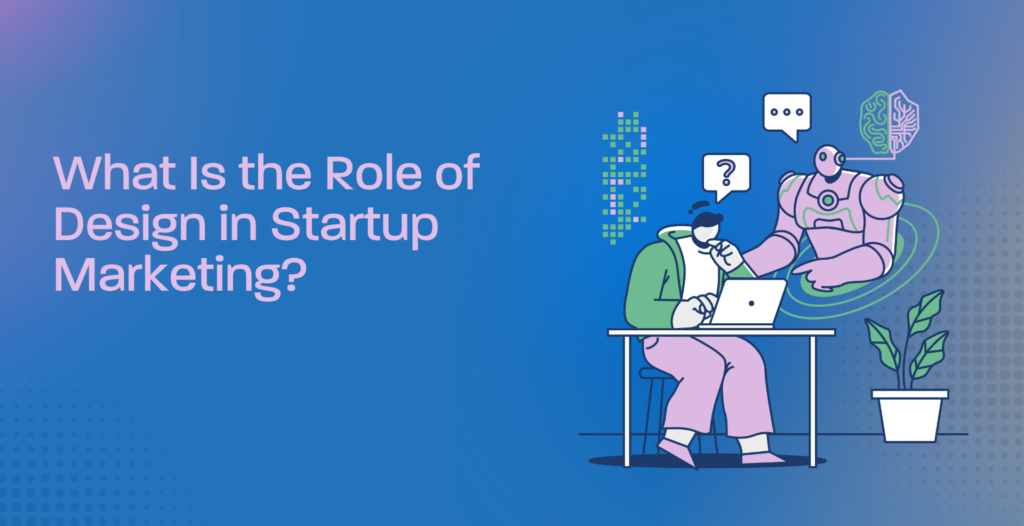

What Is the Role of Design in Startup Marketing?
Design plays a much bigger role in startup marketing than many founders first assume. In early-stage companies, design is often treated as a finishing layer—a visual polish step that happens after the “real” strategic work is done. Founders focus on product, pricing, growth channels, messaging, and fundraising, while design gets framed as something mainly about logos, colors, or aesthetics. But in practice, design shapes how clearly the market understands the startup, how trustworthy the company feels, and how smoothly people move from curiosity to action.
That is why design should not be seen as decoration in startup marketing. It is part of how the business communicates. Design affects what feels legible, credible, simple, modern, focused, and usable. It helps translate positioning into an experience the audience can understand quickly. It also influences whether the startup feels thoughtful enough to trust—especially when the company is still relatively unknown and does not have years of reputation to lean on.
For startups, this is especially important because attention is limited and trust is fragile. A confusing homepage, inconsistent brand system, weak UX, or cluttered conversion path can quietly undermine even strong messaging. On the other hand, design that reinforces clarity and confidence can make the company feel more mature, more focused, and more worth taking seriously. In that sense, design is not separate from startup marketing. It is one of the ways startup marketing becomes real to the buyer.
- Why design is a communication tool, not just a visual layer
- How design affects credibility and first impressions in startup marketing
- What role design plays in websites, landing pages, and buyer journeys
- Why weak design can quietly undermine good messaging
- How founders can think about design more strategically in the early stage
Design Matters Because It Shapes How the Market Understands the Startup
When someone lands on a startup website, sees a pitch deck, scrolls a landing page, clicks an ad, or opens an email, design begins communicating before the person has fully read a word. The spacing, hierarchy, typography, layout, imagery, interaction patterns, and visual consistency all signal something about the company. They suggest whether the business is clear or chaotic, polished or rushed, credible or improvised, thoughtful or scattered.
This matters because startup marketing is not only about attracting attention. It is about helping the right people make sense of the company quickly enough to care. That sense-making process is deeply influenced by design. If the visual structure is weak, even strong copy can feel harder to trust. If the interface is confusing, even a valuable offer can feel less reliable. If the page hierarchy is messy, prospects may leave not because the idea is weak, but because the experience made the idea harder to understand.
That is why design should be understood as part of marketing communication. It helps turn abstract positioning into an actual user experience. It makes the startup’s message more usable, more credible, and more memorable because the message is not just being read—it is being felt through the structure of the experience around it.
What the startup says matters.
How the startup presents what it says matters too.
People often form an opinion about a startup’s seriousness before they have fully processed the content itself.
Good layout and hierarchy help users understand what matters first, what the company does, and where to go next.
When an experience feels coherent and intentional, the startup feels more credible—even before the prospect becomes deeply familiar with it.
Simple, structured visual communication reduces friction in the early evaluation process.
Calls to action, page flow, and user guidance all depend partly on design, not just on copy.
It helps different touchpoints feel connected enough that the startup’s story becomes more stable over time.
Design Plays a Major Role in Building Trust Early
Trust is one of the hardest things for a startup to earn because the company often lacks established credibility. It may not have a widely known brand, a long track record, a large customer base, or an instantly recognizable reputation. That means the startup has to communicate trust through whatever signals are available. Design is one of those signals.
This does not mean every startup needs to look expensive, corporate, or highly stylized. Trust is not about looking glamorous. It is about looking coherent, intentional, and aligned with the promise being made. A startup selling a simple product can still build trust through clear visual hierarchy, consistent brand language, thoughtful interaction patterns, and pages that feel easy to understand. What matters is that the design supports confidence rather than friction.
In practical terms, trust-oriented design helps answer silent buyer questions. Is this company serious? Does it understand its audience? Does the team pay attention to detail? Will the product experience be as confusing as the website, or as clear? Is the business stable enough to consider? These are not always conscious questions, but design strongly influences how they get answered.
Startups do not build trust through design by trying to look “fancy.” They build trust by looking consistent, clear, and intentional enough that the audience feels the company understands what it is doing.
Design Helps Messaging Land More Effectively
Founders often focus heavily on the words of a value proposition, headline, or CTA—and they should. Messaging matters. But design determines whether the message has the conditions it needs to land. If the headline is buried, if the page hierarchy is noisy, if visual emphasis is misplaced, or if the reader does not know what to look at first, even strong messaging loses force.
This is one reason design and messaging should not be treated as separate worlds. A startup may have the right strategic message on paper and still fail to communicate it well because the design does not support it. The user may not see the main promise soon enough. The page may create too much cognitive clutter. Supporting proof may be visually disconnected from the claim it is supposed to strengthen. The CTA may not feel like a natural next step. All of those problems are partly design problems, not just copy problems.
That is why design should be seen as a multiplier of message clarity. It helps the audience absorb the startup’s story in the intended order and with the intended emphasis. This is closely connected to the broader work of building a strong startup value proposition and making sure that value proposition is actually easy to see, believe, and act on.
| Marketing Element | What Design Adds | Why It Matters |
|---|---|---|
| Headline and Value Proposition | Design controls prominence, spacing, emphasis, and how fast the user can orient to the main message. | Without strong visual support, even good messaging can feel weak or easy to miss. |
| Proof and Credibility | Design determines how testimonials, logos, stats, and trust elements are integrated and interpreted. | Poorly placed proof can fail to do its job even if the underlying proof itself is strong. |
| Calls to Action | Design shapes visibility, hierarchy, and whether the next step feels clear or buried. | The right CTA with weak design often performs worse than a good CTA supported by cleaner visual flow. |
| Educational Content | Design makes longer-form content easier to scan, trust, and stay engaged with. | Startups often need content to teach the market, and that teaching fails when the reading experience is tiring or chaotic. |
Design Is Also a Conversion Tool, Not Just a Brand Tool
Many founders understand that design affects brand perception, but underestimate how directly it affects conversion. Conversion is not just about the offer. It is also about whether the path to action feels understandable, low-friction, and credible. Design influences all three.
A cluttered landing page can create hesitation. A weak signup form can create abandonment. A poor visual hierarchy can bury important decision-making information. A confusing navigation structure can make prospects feel lost. A page that looks inconsistent or rushed can make the startup seem less ready, even if the product is actually strong. These are not superficial issues. They directly shape whether attention turns into action.
This is one reason startups often need to think about design through the lens of conversion flow. The question is not simply “Does this page look good?” but “Does this page help the right user understand what to do next with confidence?” That is why design connects so closely to resources like designing a startup landing page that converts and building a high-converting signup form.
Good design helps users move through a page or funnel without constantly asking where to look or what to do next.
It guides the prospect through message, proof, and action in a way that feels natural instead of abrupt or scattered.
Calls to action perform better when they are visually integrated into a clear and trustworthy page structure.
Signup and demo-request experiences are deeply influenced by layout, spacing, hierarchy, and perceived simplicity.
Startups lose conversion when their design assumes desktop comfort while mobile users struggle to parse the experience.
People are more likely to remember and revisit a startup that feels easy to navigate and visually coherent.
Design Helps Startups Look More Focused Than They Actually Feel Internally
Inside most startups, things are messy. Priorities are moving. Teams are learning. Products are changing. Messaging is evolving. That is normal. The outside market does not need to see all that internal turbulence. Design helps the company present a clearer, more stable version of itself even while the business is still learning rapidly behind the scenes.
This is not about pretending the startup is more complete than it is. It is about packaging the most important truth in a way that feels usable to the audience. A coherent design system can help the company feel more focused because it reduces the visual evidence of internal sprawl. It keeps pages from looking improvised. It helps marketing assets feel connected. It reinforces the impression that the startup knows what matters most.
That is especially helpful in early-stage companies because internal complexity often leaks outward through weak design. When every page feels different, every deck uses a different tone, every email looks unrelated, and every CTA seems to come from a different company, the startup appears less stable than it may actually be. Design helps reduce that leakage.
Strong startup design does not eliminate internal mess. It makes sure the customer and prospect do not have to experience that mess directly.
What Startups Often Get Wrong About Design
The most common mistake is thinking design becomes important only after product-market fit. Founders often postpone it because they assume it is a later-stage optimization. But even before the business has strong PMF, design matters because it affects how clearly the startup can communicate with the market while it is still learning. Weak design can make early learning slower because it adds confusion to every interaction.
Another common mistake is treating design as purely aesthetic. When that happens, founders either overvalue surface polish or undervalue design entirely. They may obsess over a logo while ignoring page structure, CTA clarity, onboarding cues, and usability. Or they may dismiss design as “just visuals” and miss the fact that poor UX is weakening conversion and trust.
A third mistake is inconsistency. Startups often create design in fragments—one landing page by one freelancer, one pitch deck by a founder, one onboarding flow by product, one ad creative style by marketing, and one website update by someone else entirely. Without a system, the company looks and feels disconnected, which makes the marketing system less coherent too.
Treating design as late-stage polish
Design affects learning, trust, and conversion too early to be treated as something the company can safely ignore until later.
Focusing only on surface branding
Strong logos and colors do not fix weak UX, poor hierarchy, or unclear conversion paths.
Letting every asset evolve separately
When decks, pages, emails, ads, and product screens all look unrelated, the startup feels less mature and less trustworthy.
Ignoring mobile usability
Many startup buying journeys begin or continue on mobile, so desktop-only thinking weakens both trust and conversion.
Separating design from messaging strategy
Design works best when it is helping the startup communicate the right priorities, not simply making the page look nicer.
Design Helps Startups Clarify, Not Just Beautify
A useful way to think about startup design is as a clarity tool. It helps simplify what the audience sees first, what it understands next, and what it is being asked to do. This is especially valuable in startup marketing because the product or category is often new enough that the company cannot rely on existing familiarity. The experience has to teach, orient, and reassure quickly.
That means design supports more than brand aesthetics. It helps reduce cognitive load. It helps decide what deserves emphasis. It helps make educational content easier to scan. It helps create a homepage that says the right thing in the right order. It helps show proof where proof matters most. It helps make the next step feel clear enough to take.
This is one reason founders should look at design less as a creative luxury and more as part of the startup’s communication system. A company that communicates complex value clearly often has stronger design than it realizes, even if the visual style is simple.
Less confusion → Faster understanding → More trust → Better action
Design Supports Better Content Marketing Too
Startups often use content to teach the market, answer objections, capture search demand, and support internal linking across solution or educational pages. But content performance does not depend only on topic choice and writing quality. Design affects whether the content feels readable, structured, and worth engaging with long enough to matter.
A poorly designed article can make valuable insights feel dense or exhausting. A strong article template with clear headers, visual rhythm, helpful spacing, and useful callout sections can make the same information much easier to absorb. That matters because startup content often needs to do more than attract clicks. It needs to help founders, operators, or buyers understand something complex enough to move toward action.
This is one reason startups benefit from design that supports a real content system. It is not just about making individual pages prettier. It is about making educational assets more usable and more aligned with how the market reads, researches, and compares solutions.
How Founders Should Think About Design in the Early Stage
Founders do not need to treat design like a luxury line item, but they should treat it like an operating advantage. The right question is not “How polished can we make this?” It is “How clearly does this design help the right person understand, trust, and act?” That mindset usually leads to better choices.
In the early stage, this often means prioritizing a few high-leverage areas: homepage clarity, a coherent visual system, simple but trustworthy landing pages, usable onboarding flows, and basic consistency across the key assets a prospect actually sees. It may also mean resisting the temptation to overcomplicate things. Good design for startups is often simpler than founders expect—not because the company lacks ambition, but because simplicity usually serves clarity better.
That is also why design decisions should be tied to business questions. Is this page helping the right audience understand what we do? Does this layout support the message? Does this CTA feel visible and credible? Does the brand system make the company feel more focused? Does the product or signup flow create unnecessary friction? Design becomes much more useful when it is evaluated through those lenses.
Homepage, landing pages, signup forms, and key product entry points often deserve design attention before lower-impact assets do.
Simple, repeatable design systems help startups stay consistent even while the business is still evolving quickly.
The best early design work helps the startup communicate and convert more clearly, not just look more sophisticated.
Why Better Design Often Makes Marketing Feel More Mature
Many startups want marketing that feels more credible, more strategic, and more “ready.” Often, better design is part of what creates that shift. It does not do it alone. But when design, messaging, and positioning start reinforcing one another, the whole marketing system feels more stable. The brand looks more coherent. The site feels easier to trust. The content feels more usable. The offer feels more legible. The experience feels less like an experiment and more like a company.
That maturity matters because buyers, users, and partners are not evaluating the startup only on logic. They are also evaluating whether the company feels real enough, clear enough, and competent enough to be worth further attention. Design helps answer those questions quietly but powerfully.
This is why startups that invest thoughtfully in design are often not “spending on looks.” They are strengthening one of the communication layers that turns marketing strategy into a buyer experience that actually works.
Frequently Asked Questions
Why does design matter so much in startup marketing?
Is design mainly about branding for startups?
Should startups invest in design before product-market fit?
What is the biggest design mistake startups make?
Explore Related Resources
If this topic is relevant to your startup, these related resources can help deepen the work around startup branding, UX, conversion, and market clarity.
Curated Startup Playbooks
See how founders can evaluate whether their brand and design system are helping the company look clearer, stronger, and more trustworthy.
Learn how design and messaging work together in the first few seconds of a homepage visit, where understanding and trust are often won or lost.
Understand how the first scroll of a startup site can support clearer positioning and stronger conversion when design is doing its job well.