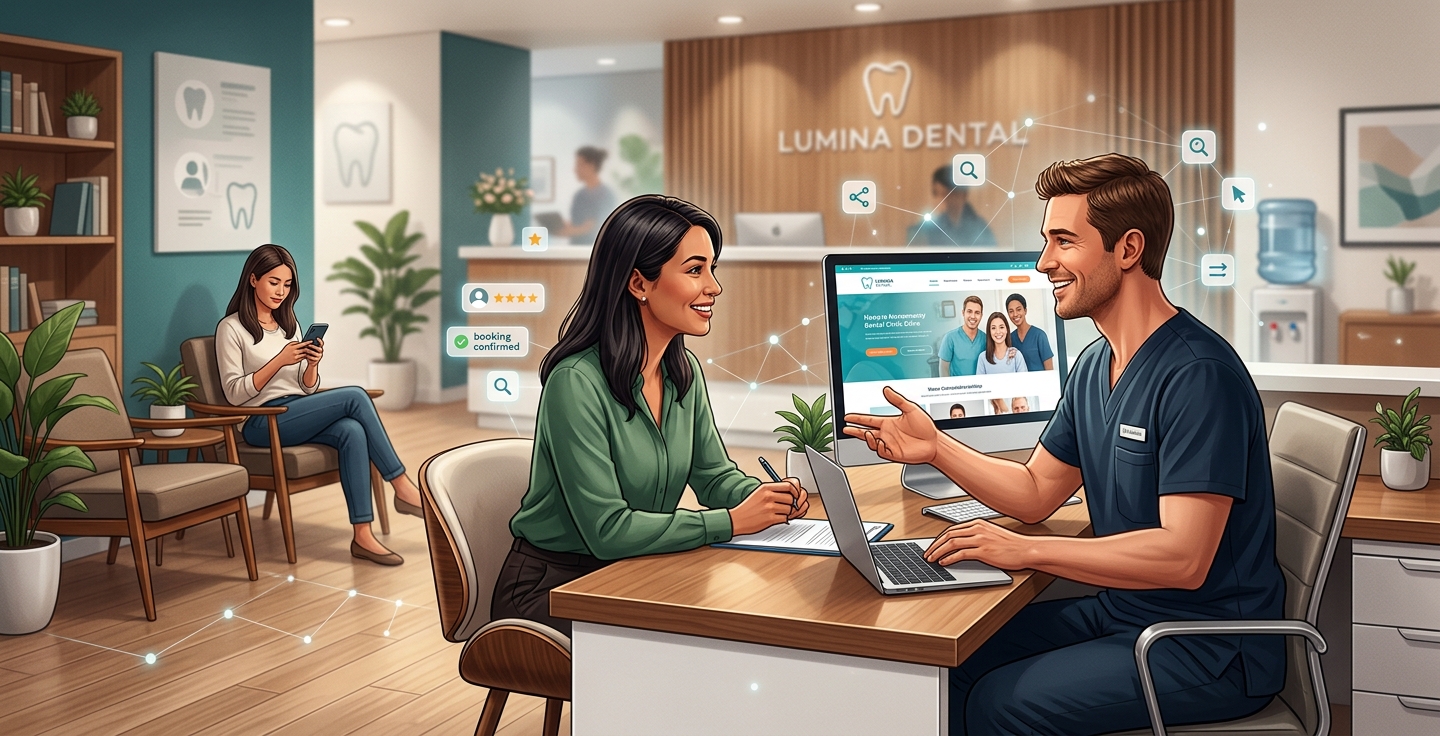
Why Your Dental Website Gets Traffic—But No New Patients
A surge of clicks but empty appointment books: more dental practices are seeing this gap than ever before. Websites attract attention, visibility grows, yet there’s a disconnect between online traffic and new patient bookings.
It’s not a lack of interest—it’s a breakdown in conversion. In a landscape flooded with digital activity, the real challenge is moving website visitors from browsers to booked, turning attention into actual growth. To understand this, we must first look at the psychology behind the modern patient.
Strategic Overview
Dental marketing has evolved, shifting from old-school patient referrals to a fierce battle for online dominance. Practices invest heavily in Google rankings, sleek websites, and paid ads—delivering historic levels of site traffic.
But sheer traffic doesn’t fill operatories. Many dental clinics are discovering that most website visits evaporate before a patient ever calls or books. The issue is a failure to bridge the trust needed for people to take the next step.
When analyzing your practice’s digital health, it is easy to get lost in “vanity metrics.” A high number of monthly visitors looks great on a report, but if those visitors aren’t high-intent, your marketing budget is essentially leaking.
To put this in perspective, let’s look at the average conversion benchmarks for different digital channels. If your current results fall below these numbers, your website is likely suffering from “conversion friction.”
| Traffic Channel | Visitor Intent | Avg. Conversion Rate |
|---|---|---|
| GMB / Local Map Pack | Extreme (Immediate Need) | 18% – 25% |
| Organic Search (SEO) | High (Research Phase) | 3.5% – 6% |
| Paid Social (Ads) | Low (Passive Interest) | 1% – 2% |
As the data suggests, capturing a patient at the moment of search is critical. However, as patient decision-making becomes more digital and discerning, it’s friction in the user journey that blocks growth—whether from messaging misfires, lack of trust signals, or a booking process that feels inconvenient.
The following trends represent the most effective ways high-growth practices are currently closing that conversion gap and ensuring their traffic actually results in chair time.
Latest Trends & Developments
1. Hyper-Targeted Ad Campaigns
Dental practices are leveraging AI to analyze patient data, focusing on specifics like age, dental needs, and location. By tailoring messages directly to the needs of different patient segments, practices increase engagement and conversion rates.
The video above explains how your intake team’s phone etiquette acts as the final gatekeeper for digital conversions.
Beyond ads, the visual “vibe” of your practice is often the deciding factor for a modern patient. They no longer trust stock photography of generic doctors; they want to see the real humans behind the masks.
2. Video Content Dominance
Short-form video is becoming essential. Videos that showcase patient testimonials, dental procedures, and staff introductions foster trust and transparency. Clinics utilizing video content can effectively differentiate their services from competitors.
Social proof in motion: Using social platforms to humanize your clinical expertise.
Finally, we cannot ignore the device where 80% of these interactions happen. If your mobile experience is a “shrunken” version of your desktop site, you are actively pushing patients away.
3. Mobile-First Design Priority
With a significant increase in mobile searches, practices are optimizing sites for speed and usability on small screens. Fast-loading mobile websites improve user experience, leading to higher patient retention and conversion rates.
While the trends above address the “how” of marketing, many practice owners still have questions about the “why” and the long-term impact on their ROI. We’ve compiled the most frequent questions regarding these shifts below.
Expert FAQ
Why is SEO better than Ads for long-term growth?
SEO builds an asset you own. While Ads stop delivering results the second you stop paying, SEO provides a compounding return on investment that builds your practice authority over years.
What is the most common reason for a high bounce rate?
In most cases, it is “clutter.” If a patient arrives on your site and has to scroll through paragraphs of text to find your phone number or a “Book Now” button, they will leave.
Transformation doesn’t happen overnight, but it does require a structured plan. If you are ready to turn your website into a patient-generating machine, follow this three-step action plan to start seeing results within 30 days.
Action Plan: How To Apply These Trends
01. Conduct a “Friction Audit”
Try to book an appointment on your own website using a smartphone. If it takes more than 5 seconds or involves a clunky PDF form, your first priority is a UX redesign.
02. Update Your Local Visuals
Replace every stock photo on your Google Business Profile with real shots of your team, your lobby, and your smiling patients. This single shift can boost click-through rates by 30%.
03. Implement Direct Booking
Stop asking patients to “Submit a Request.” Give them a real-time calendar. Modern patients want to secure their spot at 10 PM without waiting for a phone call the next morning.